Very funny anti SOPA song.
Category: New Media (Page 10 of 23)
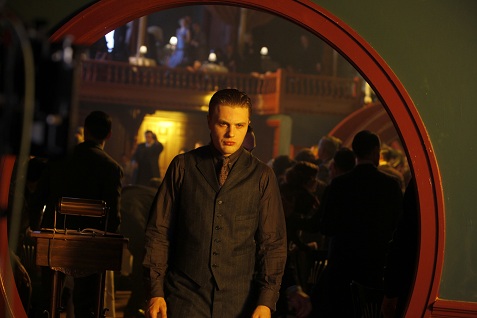
HBO doesn’t want to help Netflix undermine its subscriptions or streaming service any more, so it’s firing this salvo. This should be interesting as shows like Boardwalk Empire drive plenty of interest from consumers.
Even Vladimir Putin isn’t immune to the power of social media. We’ve seen how social media has fueled revolutions across the Middle East in the Arab Spring, and now Russian citizens are getting into the act. An independent election observer in Russia witnessed blatant voter fraud. He captured video on his phone and then uploaded it for all to see.
Mr. Duda raced home and uploaded the clip to YouTube. Though just three minutes long, it quickly became an election-day sensation, helping fuel a major demonstration of as many as 5,000 people on Monday evening in central Moscow. They chanted “Russia without Putin!” and “Putin is a thief.” Several hundred were arrested, including two major opposition leaders.
Valentin Gorbunov, the head of the Moscow City Elections Commission, confirmed the substance of the video and announced that Russian investigators had opened a case into ballot tampering by the head at Polling Place No. 2501, where the episode occurred, Russian news agencies reported Monday.
It’s stunning to see how oppressive regimes are losing their grip on the public. The key to power is controlling information, and in the past, control of TV and newspapers was the primary tool. But it today’s bottom-up world, that control is impossible with social media and the Internet. But it’s impossible to have a modern economy without an open web, so hence the dilemma for thugs like Putin. It also presents some risks but also huge opportunities for foreign policy goals in the United States.
Check this out as the founders of Kout discuss their start-up an their online payment service.
Hat tip – Robert Scoble
Tom Friedman is usually very good at explaining the disruptive influence of new technology and the implications for the global economy, even if he isn’t the first (or second) to notice something.
The latest phase in the I.T. revolution is being driven by the convergence of social media — Facebook, Twitter, LinkedIn, Groupon, Zynga — with the proliferation of cheap wireless connectivity and Web-enabled smartphones and “the cloud” — those enormous server farms that hold and constantly update thousands of software applications, which are then downloaded (as if from a cloud) by users on their smartphones, making them into incredibly powerful devices that can perform myriad tasks.
The emergence of the cloud, explained Alan Cohen, a vice president of Nicira, a new networking company, “means than anyone can have the computing resources of Google and rent it by the hour.” This is speeding up everything — innovation, product cycles and competition.
The October issue of Fast Company has an article about the designer Scott Wilson, who thought of grafting the body of an iPod Nano onto colorful wristbands, turning them into watchlike devices that could wake you up and play your music. He had no money, though, to bring his concept to market, so he turned to Kickstarter, the Web-based funding platform for independent creative projects. He posted his idea on Nov. 16, 2010, reported Fast Company, and “within a month, 13,500 people from 50 countries had ponied up nearly $1 million.” Apple soon picked up the product for its stores. Said Alexis Ringwald, 28, who recently founded an education start-up, her second Silicon Valley venture: “I have many friends — they introduce themselves as ‘reformed’ Wall St. bankers and lawyers — who have abandoned conventional careers and are now launching start-ups.”
Some like Rich Kaarlgard have been describing this as the “cheap revolution” for years. Friedman is explaining the new developments in that area. We now have it all at our fingertips all the time. It’s a powerful and exciting development. Kickstarter is a great crowdsourcing example that thrives in this environment.
Friedman uses the column to contrast Wall Street and Silicon Valley. It’s a good read.
FOLLOW US!

CATEGORIES
© 2026 Linked and Loaded
Theme by Anders Noren — Up ↑